Bionic Books

A friend sent me a link to a French publisher with an interesting mission statement:

Les editions volumiques is a publishing house focusing on the paper book as a new computer platform, as well as a research lab on book, (computational) paper, reading and their relation to new technologies….

…video game interactivity sheds a new light [on] the potential of a story [and] the role of the reader…. We do not consider the e-book as the replacement of the paper book, but we wish to enrich the tangible…connection that paper brings with all the new dimensions of the digital world. Each of our projects explores a different face of this union of paper and computation.

Their flash-heavy site (with non-embeddable videos unfortunately) showcases some stunning and fascinating projects.

Several use the iphone’s camera and touch sensitive screen to interact with game boards and artfully designed branching books. My favorite of this type “The Night of the Living Dead Pixels” is a multi-directional fold-out book imprinted with treated stills from NOTLD. The iphone camera picks up bar codes (that are cleverly blended into the high contrast b+w images) which trigger specific video clips on the iphone screen; transforming the book into a multiple-choice role-playing experience.

Another project is:

“A prototype of a paper video game using reative inks to makes shapes appear and disappear dynamically on the paper. A tiny joypad allows to play [sic] with the duck to open the door to the next page.”

The video shows what appears to be a page torn from a children’s book crazily trailing wires like witch’s hair. A hand controls the movements of a small duck through an abstract city-scape. If this ever becomes practical/affordable it could be beautifully implemented in picture books (or pop-up books! Imagine a pop-up book made with this “reactive paper”).

I really like the way this studio is going with their re-imagining of the book form. They’re innovative, exciting and–perhaps best of all–unlike traditional ebooks they’re collectible and resellable!

See all of their projects here.

Summer Book Report

People who’ve stuck around for a while know that a large percentage of my pleasure reading happens during a regular summer vacation in Canada’s Algonquin Park. This year was no exception, but I left the title selection more open-ended since we were bringing up four boxes of books for the cabin library.

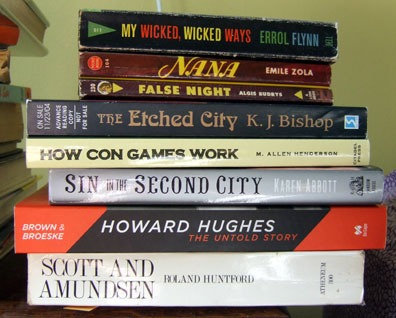
From my preliminary pile–displayed last post–I dropped The Etched City (liked the Leone-esque epic fantasy setting, but the dialog was unnatural and irritating), How Con Games Work (a reissue of a title from the 80s that would have been goofy and anachronistic even then), and Howard Hughes: The Untold Story (I enjoy Hughes appearances in Hollywood bios but he may be too much of a gothic loony to read his entire life story even if well-told, which here it isn’t).

Here’s what I did read:

Sin in the Second City by Karen Abbott – A history of prostitution in Chicago at the beginning of the 20th-century, structured around the rise and fall of the “Everleigh Club”. Founded by two sisters from Virginia, the Everleigh was the most comfortable and ostentatious pleasure house in the country. A night at the club could set you back 20-30 times an average week’s wages, but they offered gourmet meals, perfume fountains, three orchestras, fine champagne, and–of course–beautiful (and willing) women from around the world. The sisters had no trouble attracting a high grade of employee as they paid well, treated the women fairly and provided regular medical exams. Chicago’s other madams didn’t appreciate the competition and the resulting scandals, publicity stunts and industrial (?) espionage gave the anti-vice movement a very broad target.

Sin the Second City uses the history of this legendary club to provide structure to a fantastic collection of characters and stories in which the Everleigh sisters–like the best party hosts–often fade into the background. I marked a number of facts and passages in the book that I wanted to highlight but handed it off before I wrote them down. One useful bit of trivia is that the phrase “to get layed” was likely a shortened version of “Everleighed” (which in itself was a play on the hot Old Testament action: “to lie with”).

False Night by Algis Budrys – One of the early Lion paperback originals from a writer/editor I worked with at Tor books. I picked this one because it opens with a lone survivor waking up in a taxi on 14th street in a post-apocalyptic NYC. He works his way across town, dodging sniper fire, and eventually barricades himself–with a female survivor–in a Stuyvesant Town apartment.

The first section of the book–the pacification of Manhattan and beginnings of territorial expansion–are vivid and realistic, but the latter sections suffer from the cramming in of three generations, a didactic theory of geopolitics and a science fictional retelling of The Decline and Fall of the Roman Empire into the typical 130 pages of a Lion paperback. The book was apparently heavily abridged by the editor and was reissued in a significantly longer form as Some Will Not Die. This expanded edition is probably the way to read it.

If He Hollers, Let Him Go by Chester Himes – Set in a shipyard in WWII-era Los Angeles, the main character, Bob Jones, is an African-American crew supervisor. He knows his job well but he also knows that he never would’ve been allowed in the union or promoted if most of the qualified white men weren’t overseas. He’s walking on a wire, but still he can’t help relishing the money and respect he’s receiving for the first time in his life. His steady girlfriend is the light-skinned daughter of a wealthy African-American lawyer. She wants Bob to improve himself so they can be married, but she has a second life away from him when she’s able to pass as white. Aan waiting to drag Bob down is a femme fatale in the form of a hick, racist Rosie the Riveter.

Himes writes with the most well-earned hard-boiled voice I’ve ever read. The story hits all the noir buttons but without any unnecessary or overcomplicated mystery claptrap. My first Himes but definitely not my last.

My Wicked, Wicked Ways
by Errol Flynn – Greatest biography title ever. By the time Flynn wrote this, his on-screen persona and his–admittedly event-filled–life had bled inextricably together like the hues in a worn-out Technicolor print. The stories of his early days–sharpened and improved by infinite retellings–are told with zest and vigor, the latter years with a sad, boozy directionlessness that he’s all to ready to admit. I wanted to like this more but in the recounting of his impressive list of conquests with native princesses, starlets, and coat check girls the only personality Flynn manages to put across is his own.

Asterios Polyp by David Mazzucchelli – An epic and artistically ambitious graphic novel about a celebrated modernist architect who’s fallen into academia without any of his designs ever actually being built. At the beginning of the story Asterios lies in a trashed apartment and appears to be reviewing a tape of a sexual conquest (dated shelves of VHS tapes line his walls). When a fire begins to engulf his building, he runs out taking only three very specific items. The rest of the work is a series of elaborate flashbacks, self-deceptions, and parallel lives explaining how Asterios hit bottom, the importance of each of the things he saved from the fire, and how he might pull himself back up.

Mazzucchelli’s art and writing are accomplished and playful. In a flashback scene at a university cocktail party each character is drawn in a style/color reflecting their academic discipline and personality. This stylistic bubble surrounds everyone, is stronger for the bigger personalities, and only begins to blend when Asterios makes a connection with the woman who will become his wife (later when his marriage is breaking down the styles slowly split apart again). All of this without kicking the reader out of the narrative or feeling pretentious. This scene made me think of James Joyce and the frequently impenetrable scholarship and trickery needed to get an idea like this across in prose. Elsewhere in the book Mazzucchelli describes his main character as an “architect on paper” and a composer describes musical notation as “marks that measure out the passage of time” (? book needed for quote). Better descriptions of the cartoonist’s art I have never seen.

Alright running out of steam. I think I finished one other book but I waited too long and forgot what it was. Still working on Nana and Scott and Amundsen by Roland Huntford.

Parenting Aid and Summer Reading List

Received this semi-threatening Sunday-school prop as a gimme with a lot of mixed ephemera.

Distributed by First Federal Savings and Loan Association of Peoria, Ill (mid 50s-early 60s I’d guess), it shows two angelic/obedient children over the text “Silent Worship”.

(click on image for larger version)

I think even secular parents might want to print this one out and give it a try (though they may want to paste the image on–ahem–heavier stock).

And before I run out for a desperately needed vacation, here’s my reading pile for the holiday:

Not totally finalized yet. I imagine either the Hughes, the Flynn bio (or both) will prove indigestable but we’re traveling with three cartons of books (staples like Graham Greene, AC Doyle, and Agatha Christie) to upgrade and supplement the cabin library, so I’ll have a lot to fall back on.

Enjoy the dog day folks.

Weekend Stoop Haul

Had 14 promising sales mapped out for this past Saturday, but I overloaded twice; misread my map (mistaking one sale for another that started later); and had to leave the bike locked-up while I lugged a huge armload of items 2 miles home (then myself back to the bike). Ended up with bruised arms, a red neck and only four sales crossed off my list by the time it was too late to bother. Frustrating but did well on the ground I covered.

Picked up an original George Romero Season of the Witch poster, a lobby card for Eegah, the press kit for Radley Metzger’s “Dirty Girls” and 50-60 higher grade vintage paperbacks. The above items (and more) were great but bittersweet finds as they came from a local eBay seller I’ve bought from before who seems like he’s closing up shop. Most of my sunburn can be blamed on this sale as I went through every item he had.

Also picked up a “Young Architects” kit which allows you to create a 3D floorplan and a set of 100s of colored pencils. Think I’m going to use the floorplan to strategize bookshelf space. $1 each for these sets.

A cool “Rokenbok” construction toy that gives you an SNES style remote control and 8 receivers which you can place in a series of construction vehicles. Then you can switch–on the fly–between any of the vehicles and run a whole construction site by yourself! I’m afraid the Playmobile union is gonna shut us down though.

Lastly I picked up a great oldschool change dispenser that requires the double-safe belt and suspenders to hold up.

As always click on the images above to view in Flickr (w/ thrift-o-vision annotations). These are part of the “Junk in Your Trunk” pool devoted to documenting yard sale and thrift hauls.

Stoop Sale Haul, 2 Weeks Worth

Saved up a couple of weeks of stoop sale treasures to mix up the posts a bit. These hauls were the result of two beautiful weekends of warm, clear weather. Perfect for stoop sales because the sellers want to quickly get rid of their crap and hit the beach or go to BBQs.

Some highlights:

  • My second Da Vinci Code 1st after looking at 1000s of CR pages. Sadly the price has tanked and I need to bury them for a few decades
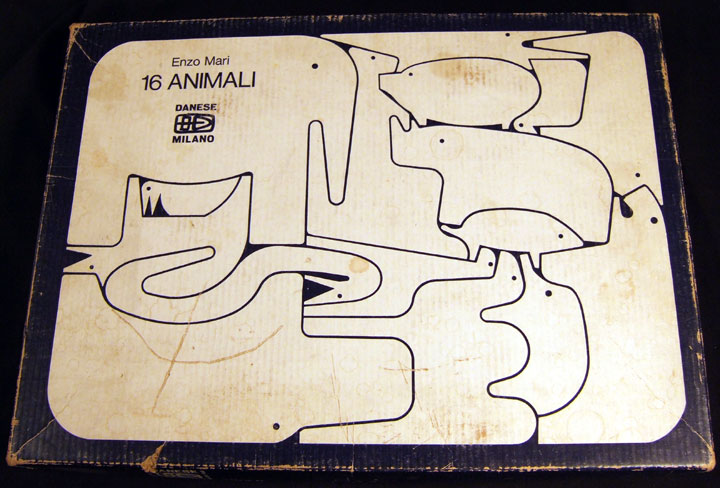
  • A beautiful Enzo Mari Animal puzzle (images here, here, and here) that I bought from a consistently triple fair-priced estate sale. The sale runners were supposed “pros” and priced at the highest realized final values on eBay (regardless of condition, or the fact that this was a Wednesday morning in Bushwick). I paid $5 for this since they had no idea what they had. Realized $275 at auction. Nyaaah. NOTE: This was the resin edition from ’72. The original wooden version from the 1950s must fetch thousands
  • Crumb’s Book of Genesis
  • Get Tough! 1st Edition of hand-to-hand fighting manual, “as Taught to the British Commandos, and U. S. Armed Forces”. Wartime issue paperback in original HTF dust wrapper
  • A selection of Hot Rod and Big Daddy Roth titles

  • Handmade big rig toy chest! 52″ x 18″. Working wheels, removable trailer, detailed open cab. I f***ing love this thing!
  • Large pile of 100% wool and marino wool yarn, some handspun. According to the wife–for whom these were a bribe–yarn like this fetches $8-10 a skein. I paid $.50 each (don’t tell her)
  • Tubful of Warhammer 40k Space Marines and LOTR miniatures. These can go for decent coin but it will require extensive undercover 21 Jump Street-style geek research.

If the summer keeps up like this, I’ll be one happy camper.

As always click on the images above to view in Flickr (w/ thrift-o-vision annotations). These are part of the “Junk in Your Trunk” pool devoted to documenting yard sale and thrift hauls.

Zombie Report: The Roost

The other night I dreamt I was in a theater lobby with five different ticket booths. Each was selling tickets to a different zombie movie but, because there were letters missing on the marquees, I couldn’t tell which was which and I ended up buying non-refundable tickets to the wrong film (I’m guessing it was an entry in the Resident Evil series). This frustrating experience was my subconscious reminding me that I’m seriously behind on my zombie report. So here’s a review of a film I saw probably six weeks ago. Let’s test my horror recall.

The Roost (dir: Ti West, Glass Eye Pix, 2005)

I picked this up after winning (Thank you, MondoMovie) and loving West’s House of the Devil; a Halloween-meets-Rosemary’s Baby tribute to 1980s horror.

The Roost is West’s first feature and understandably less accomplished than HOTD but still fun and (mostly) effective. It begins with a group of 20-somethings on their way to a wedding. They’re already off-course, on an ill-advised short cut, when a bat smacks into their SUV windshield and they wind up in a ditch. They do the classic “wander off in the dark to find help” and come upon a small farm with a massive, cavernous, Taj Mahal of an evil-looking barn. The barn is full of millions of temperamental bats who will bite you and turn you into the walking dead. That’s it. Pretty basic.

The barn (apparently the same as used in Hitchcock’s Marnie) is a great location full of murky corners, made even more murky by an effective use of DV. It’s hard to believe that the elderly couple who own the farm need such a behemoth of agricultural architecture, but that’s nit-picking.

The bat effects are simple and effective and–together with the zombies they’ve infected–make for a good two-stage monster. Bats can fly and fit through small crevices, zombies can open doors and wrestle; that doesn’t leave a lot of safe places.

The 20-somethings are self-absorbed douches who don’t like each other and don’t seem to care much about the couple they’re on the way to celebrate. The only time anyone says anything interesting or insightful is when they’re backstabbing. I see these kind of characters so often that I don’t know if they’re a shared trait of cynical early 2000s horror; if the inability to created likeable characters is a common weakness in screenwriters; or if I just don’t like anyone younger than me. In any case they kept me from becoming completely involved in the film and had me waiting for the kills (one of which—like another in House of the Devil–is so simple, sudden and brutal that it will stick with you for a while).

The Roost also features an odd framing device with Tom Noonan (the gangly killer from Manhunter) playing a late-night TV horror host presenting the events of the film. This device is cute but has absolutely no connection to the rest of the movie, and seems kind of slapdash. I’m guessing it was just to pad this out to feature length (though it’s still a brisk 81 mins).

Outbreak Location: Rural Pennsylvania
Zombification cause: Super-rabies
Mobility: Slow and awkward (but they vanish when you look away for 5 seconds)
Rating: Three undead Hare Krishnas (out of five)

Dutch Treat

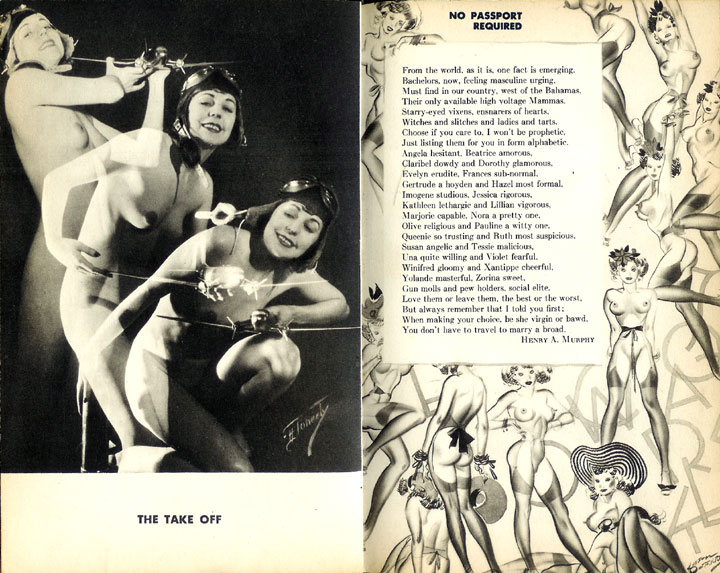
I just cataloged the hell out of this book because it’s beautiful and absolutely worth it.

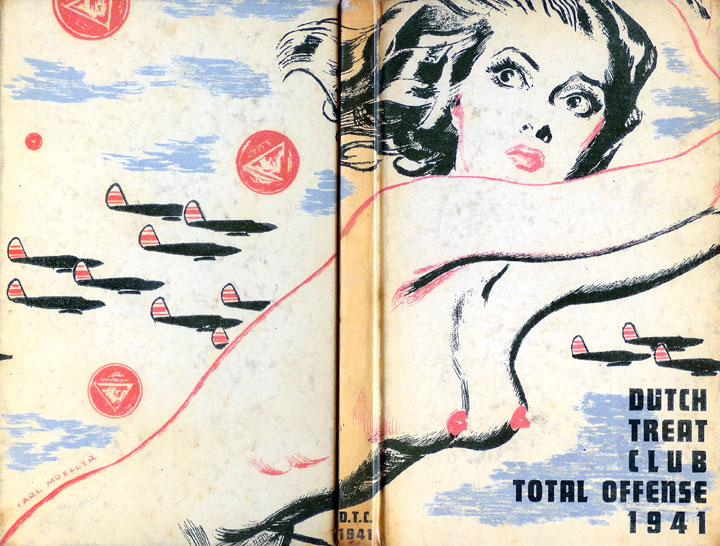
Dutch Treat Club: Year Book 1941 “Total Offense”, 1941. First edition.

Privately printed yearbook for the “The Dutch Treat Club”, a society of illustrators, writers and performers established in the early 1900s and still going today.

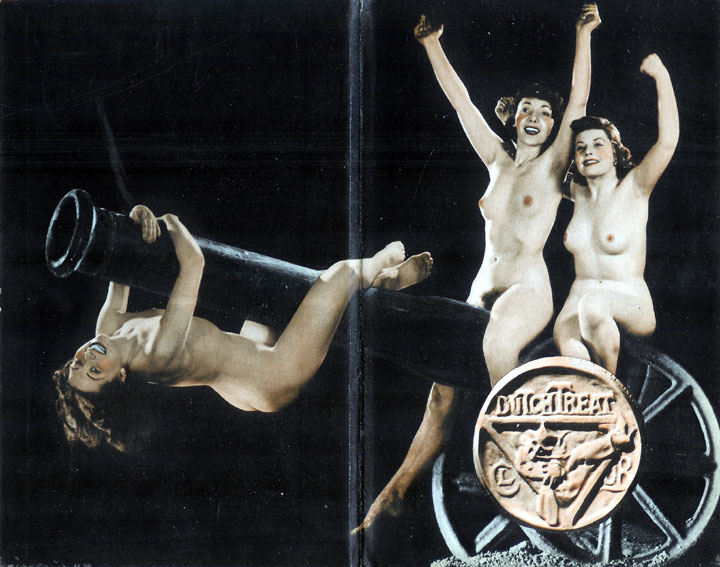
(click on images for larger, NWS versions)

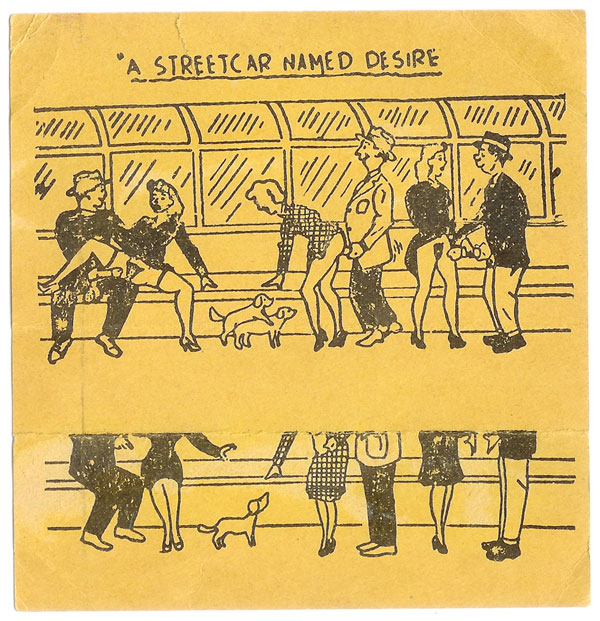
Wartime issue. 8″ X 5.25″. Paper-over-board, pictorial wraparound cover. Laminated/glossy. Photo EPs of nude women cavorting on a cannon. Unpaginated but approx 100 pages. Edition page jokingly states: “This edition is strictly limited to 12,500,00 copies (Berlin), 12.5 (London), of which every copy is number 1” (numeral “1” hand lettered).

Elaborately printed and illustrated. Filled with pin-up / girly art and cartoons from member illustrators including:

  • Rube Goldberg
  • Dean Cornwell
  • Carl Mueller
  • Arthur William Brown
  • Otto Soglow
  • Harry Beckhoff
  • John J. Floherty, Jr.
  • Frank Godwin (creator of the strip “Connie”)

Because this was a privately printed publication, the art is racier than other work from these artists and more explicit than comparable pin-ups of the time (i.e. pubic hair). Also includes a pop-up illustration by Tony Sarg.


Famous members of the Dutch Treat Club include:

  • Robert Benchley
  • Robert M. McBride
  • Isaac Asimov
  • William Morris
  • Ogden Nash

and more. Some of the club officers/members listed in this volume:

  • Clarence Budington Kelland (president)
  • Edward MacNamara (actor)
  • Harold Ross (founder of the New Yorker)
  • Whitney Darrow (cartoonist)
  • J. P. McEvoy (Dixie Dugan creator)
  • Westbrook Pegler (journalist)
  • Lowell Thomas (broadcaster)
  • Frank Crowninshield (editor Vanity Fair)
  • William Beebe (Naturalist/Author)
  • William De Beck (cartoonist “Barney Google”)
  • Cliff Sterrett
  • Rex Stout
  • Efrem Zimbalist

and more. Other features include: A list of club speakers and events, news/current event parodies, and a full list (with addresses and phone #s) of current members. Pencil inscription from previous owner “W. R. Steinway” dated “April 4, 1941”. Covers lightly rubbed/scuffed showing light tanning to spine. Bump with slight exposed board to lower front cover. Binding slightly shaken but solid. Very Good. Hardcover.

Apparently these yearbooks were well-known for their girly art but this is the first I’ve seen (though hopefully not the last). Listed for sale here but I’ll be sad to see it go.

And more Dutch Treat Annuals.

Last Weekend’s Haul


Two glorious sunny days full of bike-riding, stoop sales and a street fair. Good times.

Here’s my haul from the weekend. (click on the image to view in Flickr w/ thrift-o-vision annotations). These are part of the “Junk in Your Trunk” pool devoted to documenting yard sale and thrift hauls.

Best find was the 1941 yearbook from the “Dutch Treat” social club filled with fantastic girly art and even a pop-up. I’m going to break this out into a separate blog post, it’s so nice.

The cupcake tin and shawl are for the Missus.You have to bring a few of those home if you want to get away with the smut and video games. It’s a yin-yang thing.