Vintage Miami Parade Photos

One of my last and coolest finds from this year’s WLGS was this suede-covered souvenir photo album from Miami, Florida.
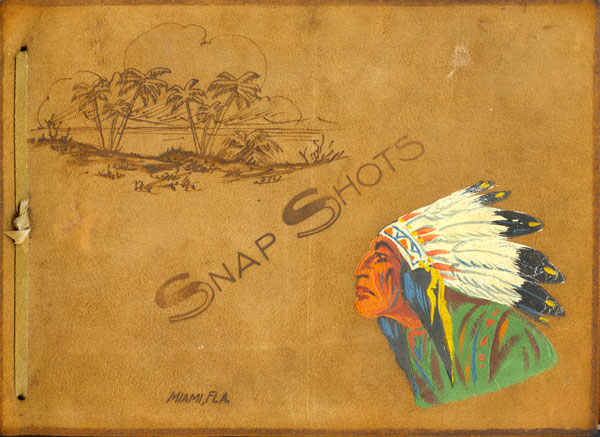

It was stuffed with photos and “real photo” postcards from the Miami area as well as somewhere in New England (judging from the 5-foot snowfall in several of the images).

The photos span from the 1910s to–I’d guess–the early ’40s and many of the postcards are addressed to a “Mrs. Grace Hammond.”

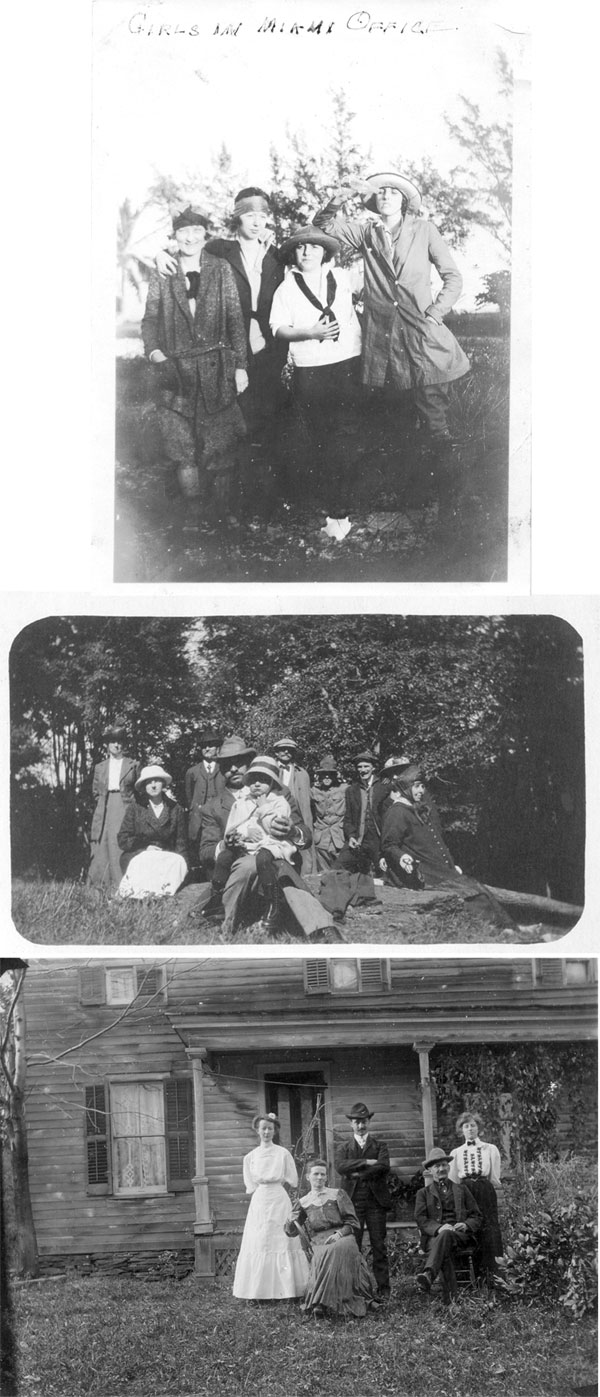
My favorite photos show parade floats bedecked in coconuts and giant paper-mache dragons.

Here’s a few of the highlights:

Vintage Miami Parade Photos
Vintage 1910-20s Family and Friends Photos
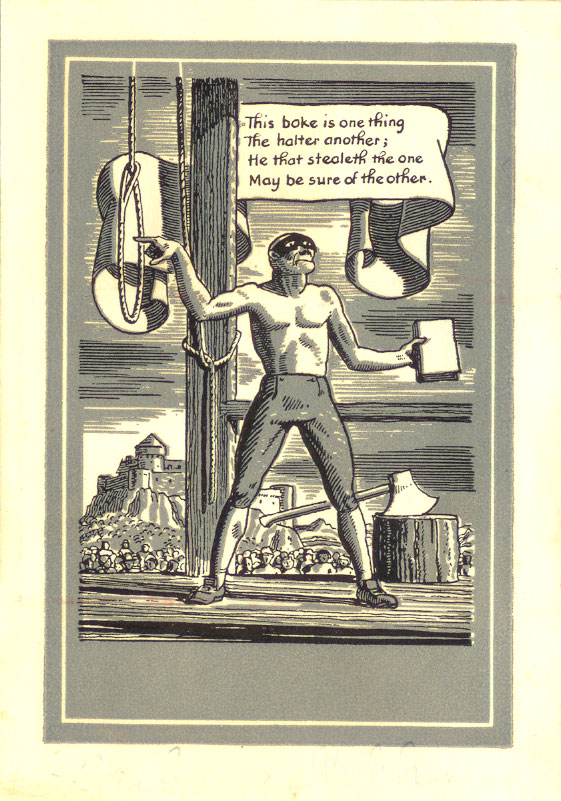
Hangman Bookplate

I found this bookplate some time ago (before I started collecting or bookselling) but I just turned it up in the move.

It has a great threatening hangman / executioner theme:

This boke is one thing
The halter another;
He that stealeth the one
May be sure of the other.


An eBay seller credits this to Rockwell Kent “commissioned and published by the Antioch Bookplate Company, Yellow Springs, Ohio, in 1950.” Barbara Gelhard (?) is faintly penciled in the lower margin.

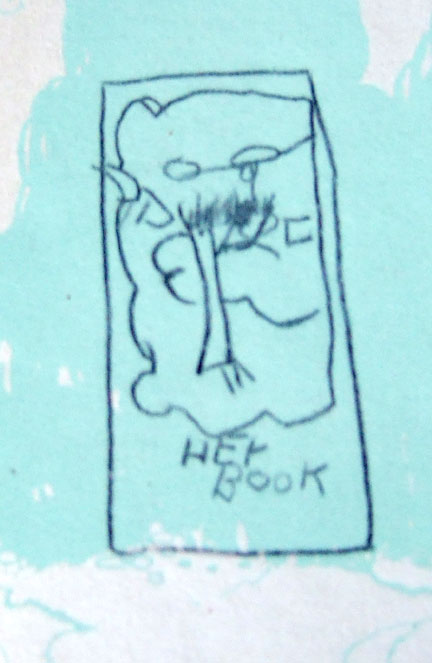
This next is a child’s homemade bookplate by “Shirley Jean, 1929”:


Found in the rare 1920s children’s book The Lost Princess: A Fairy Tale of Marie Queen of Roumania. I wonder if Shirley was copying her parents bookplate or if this was her own creation.

I love finding signs in children’s books that the owner grew into a true bibliophile. I once found a library-like pocket made out of construction paper and held in the book with cartoon animal stamps. Very cute.

Bookseller Ticket Collection Grows by Leaps and Bounds

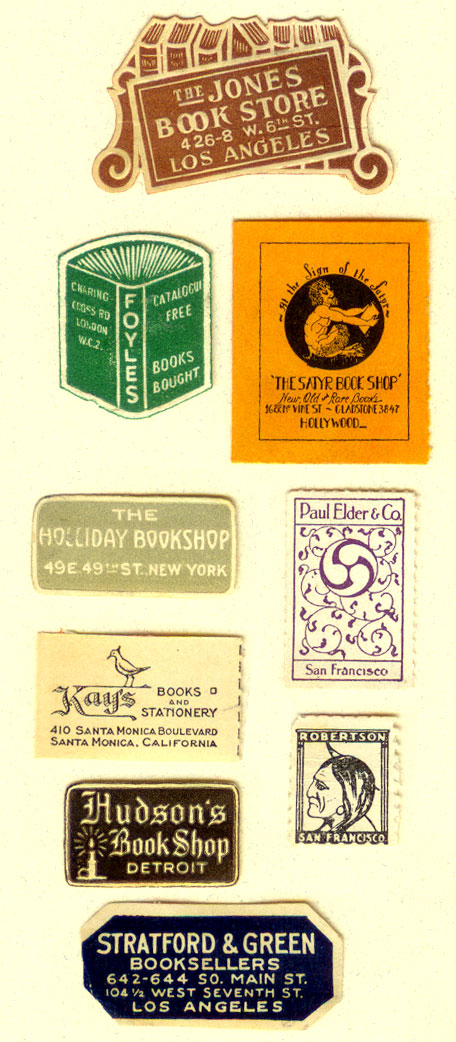
Bookseller Sarah Faragher of Sarah’s Books in Bangor, Maine made me a generous gift of a fat envelope of bookseller tickets (doubles from her collection).

Here are a few of my favorites:


She also offered useful advice on extracting these little buggers.

I find that the easiest way to get tickets out of books is this (if they don’t just pop out because the glue is so old): wet a small square of paper towel with enough water so if you squeezed it out water would be visible, then fold the bit of paper towel up until it’s the same size as the ticket you want to remove, put it over the ticket and let it sit for a few minutes. The water will soak into the ticket and loosen the glue, then the ticket will almost always (unless it’s foil) let go very easily. Set the ticket aside to dry off, leave the book open to dry, too. It doesn’t take long and it really works. Same technique for removing book plates, but I’ve seen people use larger damp pieces of felt for that. After the ticket dries I usually write on the back of it the date of the book it came from, just to get an idea of when that bookseller was in business. Or if someone else sends me tickets I write their name on the backs. All in pencil of course…

This has already saved me hours of heartbreak and disappointment. Check out Sarah’s blog. She posts on running her dream business, books about books, landscape painting and nature. It’s always a nice contrast from the mean streets of NYC bookselling.

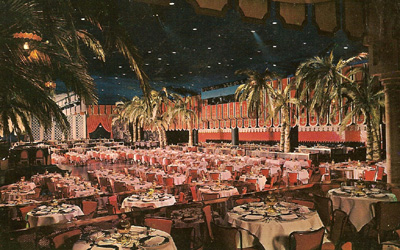
Anyone have any photos or know anything about The Satyr Bookshop of Hollywood, CA? All I’m Googling is that the store was designed by architect Julius Ralph Davidson who apparently worked in the Beaux-Arts style, created sets for Cecil B. De Mille and designed famous nightspots: The Cocoanut Grove (Hollywood) (pictured below) and The High Hat Restaurant (LA).


More bookstores should be designed like nightclubs says I, with shady mob ties and Paris Hilton slagging it up in the poetry aisle and stumbling out at 4AM…sorry, I’m drifting.

UPDATE:

A commenter left a useful link from the Rara-Avis Archives containing more info on the Satyr Book Shop.

–From the LA Times magazine section about the 81-year-old Musso & Frank restaurant:

Two remarkable bookstores within a block or so of Musso’s made the Grill an even more attractive hangout for writers. Faulkner, Chandler and Aldous Huxley often browsed at Louis Epstein’s Pickwick Bookshop (opened in 1938). Stanley Rose’s store, literally next door to Musso’s, was a more social place, where writers drank whiskey and swapped stories with the Texas-born bookseller. Musso’s served as the Rose store’s unofficial banker; patrons of both establishments moved back and forth freely in (as Starr wrote) “a nonorganized movable feast.”

An earlier store in which Rose had been a partner, the Satyr Bookshop on Vine, was busted for pornography; it inspired the salacious Bennett’s Bookshop in Raymond Chandler’s 1939 novel, “The Big Sleep.” (Rose’s defense lawyer on the porno charge was Carey McWilliams, whose nonfiction work “Southern California Country: An Island on the Land” in 1946 inspired its own L.A. fictions, notably Robert Towne’s script for “Chinatown” in 1974.)

Thompson, the pulp-noir master (“The Killer Inside Me,” “The Getaway”), lived four short blocks from Musso’s and used the Grill as a virtual office throughout the ’60s, according to biographer Robert Polito. The old writer favored the pot roast special and the zucchini Florentine, washing them down with Jack Daniel’s and Heineken chasers. At Musso’s, Thompson played the hard-bitten raconteur, spinning tough yarns to an eager audience of one or two. And in a booth at Musso’s, he made deals and signed papers with sharp young producers, acts he later regretted.

This sounds like the most hard-boiled bookstore ever. (Thanks Diana!)

Two last bookplates…

and then I will try to cool out on the ephemera jag for a while. I started hitting the dollar carts at local bookstores just looking for plates. That’s when you know you’ve got it bad.

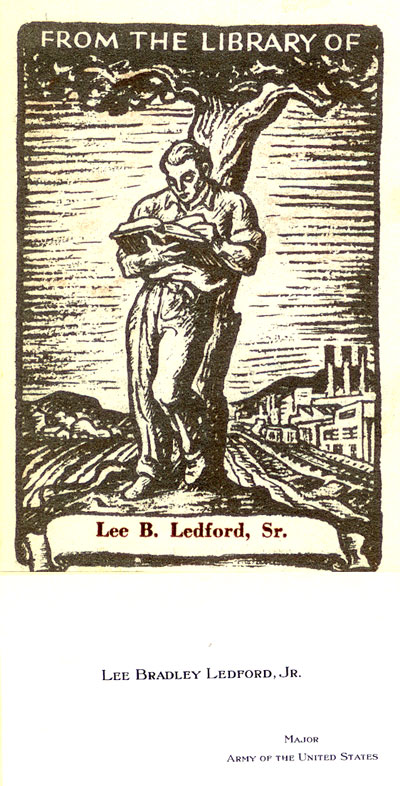
Here’s a storied plate in kind of a Thomas Hart Benton-style, found in a copy of Western Star by Stephen Vincent Benet, 1943.

“From the Library of Lee Bradley Ledford Sr.” & Jr.

Lee Ledford Jr. was a native of Harlan County, Kentucky, and a Major in the U.S. Army at the time of inheriting this volume. As a 1st Lt during WWII, it looks like he served with the 489th Armored Field Artillery Battalion, 7th Armored Division. Later in life he established a foundation to benefit college undergrads from Appalachia.

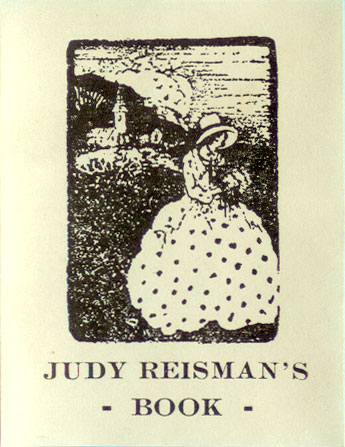
I found this next plate “Judy Reisman’s Book”, in a copy of Popular Stories for Girls, Cupples and Leon, 1913.


Don’t know anything about it, but I like the rough, block-printed style.

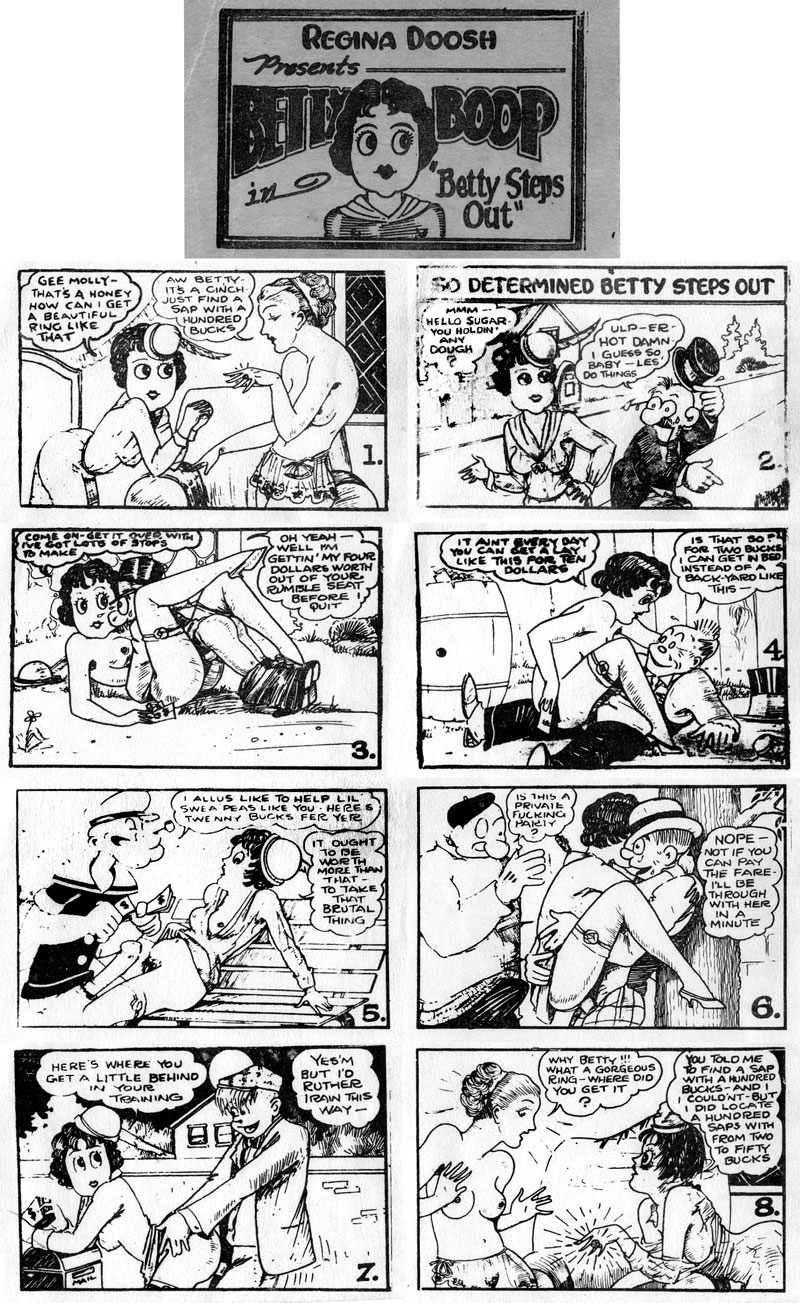
Tijuana Bibles: Betty Boop

I just picked up a rare lot of 6 “Tijuana Bibles“. These were cheaply produced, 8-page stapled booklets from the 1930s-40s featuring the pornographic adventures of cartoon characters, politicians, mobsters and anyone vaguely sexy who stumbled into the public eye.

TBs were the Depression-era equivalent of the celebrity sex-tape, so turn your monitor towards the wall and enjoy “Betty Steps Out” (WARNING: Not even slightly worksafe…feeelthy in fact.)


This one is pretty well-drawn for the form. Since all of the characters (besides Betty) look line-for-line like their overground counterparts, I’m betting some tracing was involved. If your browser isn’t showing it large enough to–ahem–read use the magnify function or download to your desktop.

This one and five others (including: Harold Teen, Fred “Killer” Burke, Moon Mullins) are available from my store here.

Three Bookplates

Some new bookplate acquisitions.

This first one is my favorite to date. A stylized Art Nouveau / Deco ship on a stormy sea. If I’m reading the lettering correctly it was designed for (or by) “AMO Peet”, “From My Mother’s Library”.


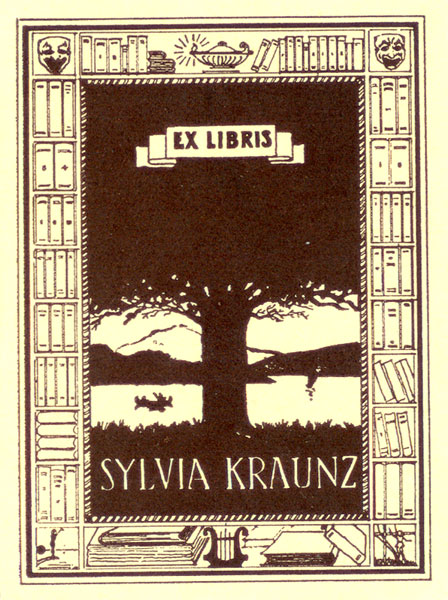
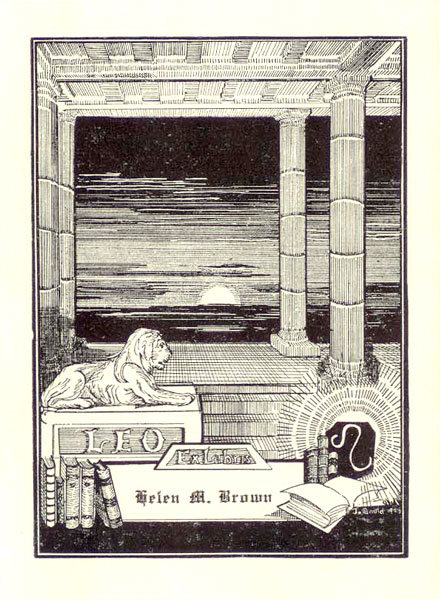
The next two are less stylized (and probably off-the-rack) but still nice.

An arboreal scene with a bookcase frame, belonging to “Sylvia Kraunz.”


Lastly an astrologically-themed “Leo” bookplate with some nice Roman columns, belonging to “Helen M. Brown” an editor at Doubleday until the 1990s.

Femme Fatale Bookplate & W. J. Lugsdin Ad

Just found a couple of nice ephemera items. First this noirish bookplate belonging to “Ruth Parsons, anno 1944”.

Click for larger version. It’s looks better than it reproduces (my scanner isn’t playing well with the printing dots).

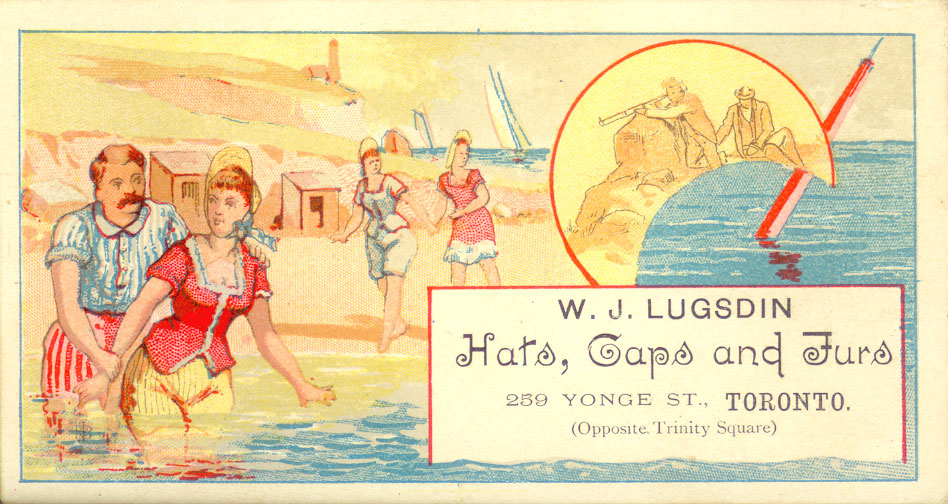
And this ad card from W. J. Lugsdin Hats, Caps and Furs, 259 Yonge St. Toronto (Opposite Trinity Square)

Nice color, charming vintage bathing costumes and peeping toms. On the reverse is penciled “Ellsworth Rishel, Toronto, Ont, Canada”

I’m not finding anything about the business but here’s an image of Yonge Street from around the period of the card.